
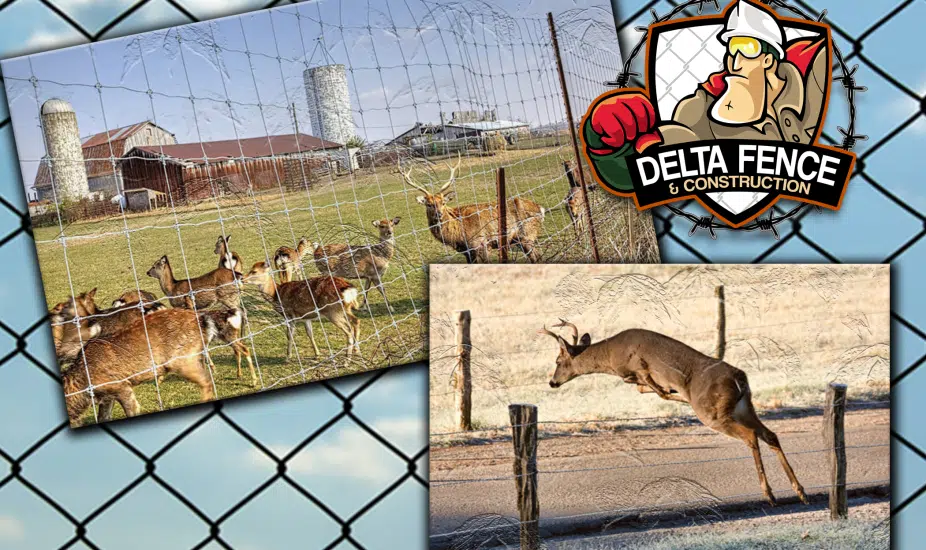
Protecting Your Garden and Property from Deer in the Upper Peninsula
In the Upper Peninsula, we mark time by the seasons — the first hard frost, the crack of a bat at a Little League opener, the smell of woodsmoke in October. And every November, something remarkable happens: schools close, towns go quiet, and an entire culture retreats to the deer camp. The first day of rifle deer season isn’t just a day off — it’s a tradition woven into UP identity. For proof, see Escanaba in da Moonlight — though locals will tell you it’s a bit embellished.
But here’s the catch: when rifle season opens in mid-November, Yoopers celebrate the White-tailed Deer as a prize. The rest of the year, they’re a pest. A very persistent, very hungry pest. If you’ve put time and money into your garden, landscaping, or outdoor property, deer are likely your number one threat — and they don’t respect property lines.
Why Deer Are Such a Problem in the UP
White-tailed Deer are intelligent, adaptable, and driven by a powerful survival instinct — especially in the months before winter. They’ll travel into the City of Escanaba, cross busy highways near the lakefront, wander through cemeteries on their way to your neighbor’s yard, and eventually end up in yours. They don’t need a gap in the fence. They need a reason.
And UP homeowners give them every reason. We plant hostas, tulips, daylilies, and vegetable gardens — exactly the kind of lush, calorie-dense forage deer are looking for before the lean months of winter. The deer aren’t trespassing. From their perspective, you’ve put out a buffet.
This is why a good friend’s hosta project ended in mowed-down nubs. Despite being planted near the house, in a “civilized” yard, in the middle of town — the deer found them. They always find them.
Common Deer Deterrents — and Their Limits
Deer-Resistant Plants
Planting deer-resistant species — lavender, Russian sage, ornamental grasses, native ferns — around the perimeter of your yard can reduce casual browsing. Deer generally avoid plants that are heavily aromatic, thorny, or fibrous. This works best as a first line of defense along open borders, not as protection for a prized garden.
Chemical Repellents and Sprays
Spray-based repellents — typically scent deterrents or taste aversants — can be effective for small areas, potted plants, and seasonal flowers. They’re also a reasonable short-term solution for new transplants or seedlings that haven’t yet developed tough foliage.
The limitations are real, though: spray washes off in rain and must be reapplied frequently. A hungry deer in late October isn’t going to let a mild scent stop it from reaching a mature hosta or a full garden bed. Sprays work at the margins — not as the primary strategy for a large planting area or anything you’ve invested serious money in.
Fencing: The Most Reliable Long-Term Solution
When it matters — when you’re protecting a vegetable garden, established perennial beds, young trees, or a landscaping investment — a properly installed fence is the only solution with reliable, season-after-season effectiveness. No maintenance schedule. No re-application after rain. Just a physical barrier that works.
The right fence depends on your property, your needs, and how determined the local deer population is. Here’s what UP homeowners most commonly use:
Metal Wire Deer Fencing (Extended Height)
Galvanized or poly-coated wire mesh fencing at 7–8 feet is the most deer-proof option available. White-tailed Deer can clear a standard 6-foot fence with ease — particularly if they can see, smell, or sense food on the other side. At 7–8 feet, the jump becomes impractical even for large adults. Wire fencing is the top choice for vegetable gardens and orchards where deer pressure is high.
Electric Fencing
Electric fence is highly effective and cost-efficient for larger perimeters — farms, rural homesteads, acreage with gardens or orchards. A properly baited and energized electric fence teaches deer to avoid an area quickly and reliably. Bait stations (using peanut butter on foil, for example) condition deer to associate the fence with a negative stimulus within just a few visits. Electric fencing requires some maintenance — keeping vegetation clear of the wire — but ongoing costs are low.
Wood Privacy and Ornamental Metal Fencing
For residential yards where aesthetics matter as much as function, wood privacy fencing and ornamental steel or aluminum can be effective — with important caveats. Deer are far less likely to jump a fence they can’t see through (a solid privacy fence removes the visual draw of what’s on the other side). Height still matters: a 6-foot privacy fence can be cleared by a motivated deer. Gaps at the base must also be secured — UP deer have been documented pushing under loosely installed fences, especially in snow or soft ground conditions.
What to Know Before You Install a Deer Fence
A few factors consistently determine whether a deer fence works or fails in the UP:
- Height matters more than you think. White-tailed Deer routinely clear 6-foot fences when motivated. For high-pressure areas or food gardens, 7–8 feet is the minimum recommendation from wildlife management professionals.
- The base is just as important as the top. Deer will go under a fence that isn’t properly secured at grade. This is especially common in UP conditions where freeze-thaw cycles shift the ground and create gaps. Proper post depth and base securing are non-negotiable.
- Deer are driven by smell, not sight. White-tailed Deer are largely colorblind but have an exceptional sense of smell — estimated to be around 1,000 times more sensitive than a human’s. A tempting garden that a deer can smell will be investigated regardless of what’s in the way.
- Pressure is seasonal. Late summer and fall, when deer are building fat reserves for winter, is when fence integrity gets tested most aggressively. A fence that works in June may be challenged hard in October.
- Tick management is a secondary benefit. Some deer fencing options — particularly perimeter fencing that keeps deer populations away from your yard entirely — can meaningfully reduce the tick pressure on your property. In the UP, where Ixodes scapularis (black-legged tick) populations have expanded significantly, this is a genuine health consideration worth factoring in.
Work with a Contractor Who Knows UP Conditions
Deer fencing in the Upper Peninsula isn’t the same as deer fencing in suburban Ohio. Frost depth, snow load, ground conditions, and local deer behavior all factor into which fence performs and which one fails by the second season. That’s why the contractor experience matters as much as the product.
Delta Fence & Construction has been installing residential and commercial fencing in the UP for more than 25 years. That track record means they’ve seen how different fence types hold up through UP winters, what deer in this region actually do, and how to build something that lasts. If you’re starting to think through options, the Outdoor Showroom is a practical first step — you can compare fence styles, heights, and materials in person, and their staff can help scope the project and estimate what you’ll need.
If you live, work, or play in Upper Michigan and want to learn more about residential fencing options, Delta Fence & Construction is ready to help. Call (906) 786-1046 or visit www.deltafenceman.com to schedule a consultation today.

Delta Fence & Construction is a licensed, bonded, and insured fencing contractor in the State of Michigan.